Technical Overview
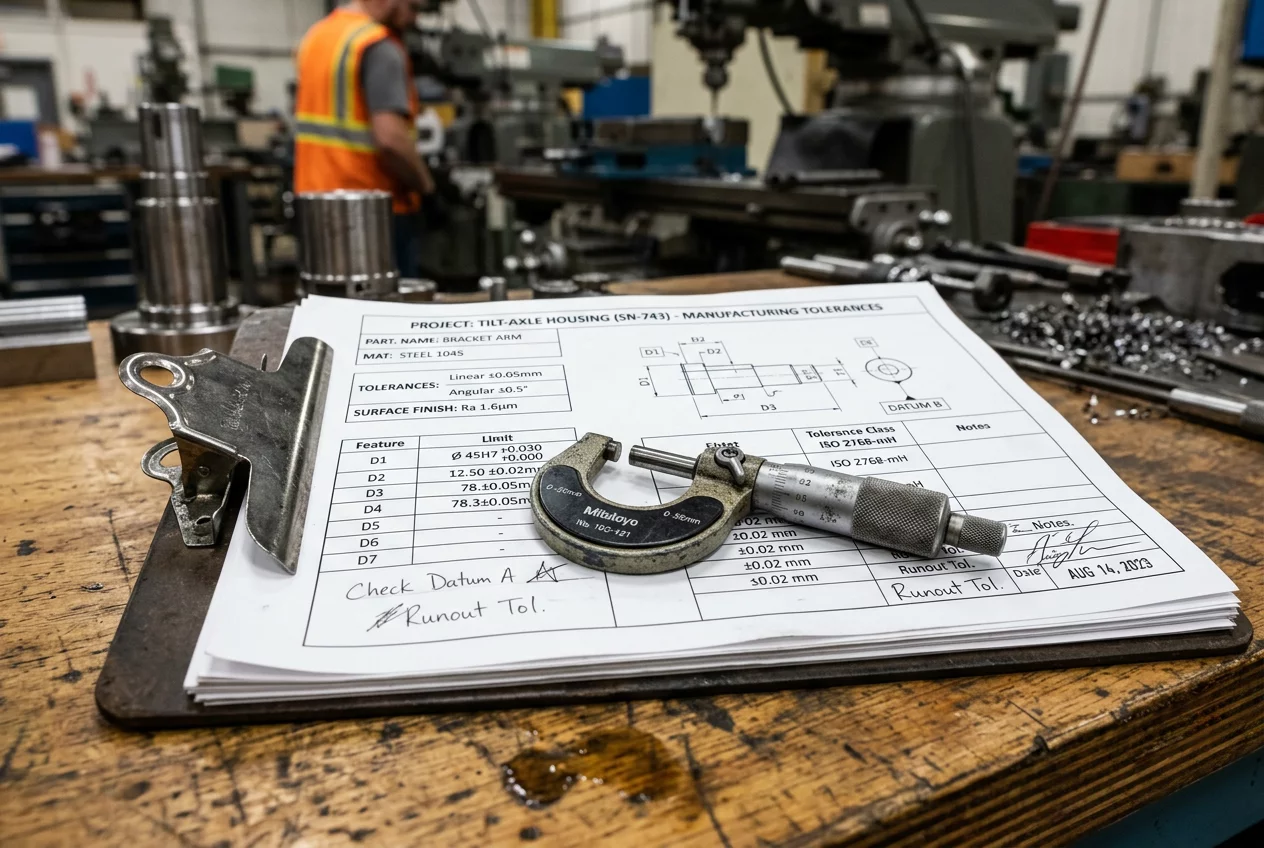
Shaft tolerances are the specified limits of dimensional variation for cylindrical parts, designed to ensure correct assembly and functional performance. In mechanical design, these tolerances dictate the "fit" between a shaft and its corresponding hole, such as a bearing or hub. Selecting the correct tolerance is essential for controlling friction, heat generation, and mechanical wear. For most industrial applications, ISO 286 standard fits provide a universal language for engineers to specify these dimensions accurately. Achieving a precise h6 or g6 tolerance often requires secondary operations such as centerless grinding to meet the strict micrometer-level requirements.
Selecting the appropriate fit class is the first step in shaft design. A clearance fit allows for relative motion, while an interference fit ensures components remain stationary relative to each other. The choice depends on the application's torque requirements, operating temperature, and rotational speed. For instance, high-speed spindles require extremely tight tolerances to minimize imbalance and vibration, which could otherwise lead to premature bearing failure. Engineers must also consider the "maximum material condition" (MMC) to guarantee that components will always assemble even at the extremes of their tolerance bands.
From a manufacturing perspective, maintaining these tolerances requires high-precision equipment and rigorous quality control. Thermal stability in the workshop is a frequently overlooked factor; even small temperature fluctuations can cause a steel shaft to expand beyond its tolerance limit. Final inspections are typically conducted in climate-controlled environments using calibrated laser micrometers or CMM machines. Properly documented tolerances reduce waste, lower production costs by avoiding over-specification, and ensure that spare parts are interchangeable across different production batches.
Operational Constraints
- Radial runout must be kept within 0.005mm to ensure rotational balance at high RPMs.
- Surface roughness (Ra) must not exceed 0.8µm on all functional contact surfaces.
- Material must be heat-treated to a minimum hardness of HRC 45 for wear resistance.

Revision Comments
Documentation Review
Tolerance requirements are easy to read and align perfectly with our production capabilities for the Shaft Tolerances documentation.
Add Engineering Note
To leave a comment, please log in to your account.